- New Mountain Investments
- Posts
- A Better Way To Build

This week, most of the families in our group relocated to Costa Rica.
I have secured housing and vehicles for them. Now, we can focus on making sure we execute our due diligence.
We currently have 2 deals under contract and are waiting on a 3rd.
Last week, we decided to hire the engineering firm DEHC. They will be leading on the technical side of our due diligence. The firm has a reputation as the top engineering firm in the country.
They handled projects like the '4 Seasons in Papagayo' and 'JW Marriott in Hacienda Pinilla.'

4 Seasons Resort, Papagayo
We have a lot of work to do over the next 90-180 days and want to ensure we have the best team assisting us.
As we've bid our Playa Negra project, it has been obvious to us that there has to be a better way to build these homes.
The current building method in Costa Rica is CMU construction (Concrete Masonry Unit) which is terribly rough on the contractors. Their building method is also incredibly inefficient. Concrete homes are the right route when you consider earthquake risks and the climate of Costa Rica, which has brought us to ICF.
ICF construction (Insulated Concrete Forms) is a replacement to the typical stick frame construction you see used in the US, and the CMU construction you typically see used in Latin American countries like Costa Rica.
With CMU, the concrete is mixed on-site with the bags being carried by the contractors. The mixing is terrible for their lungs, and the pours are terribly inefficient.
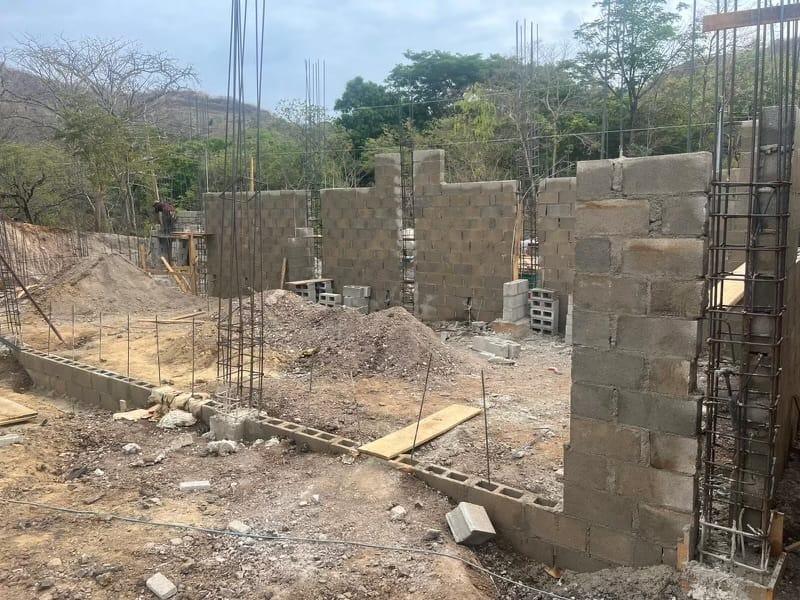
A typical CMU construction site
With ICF, the contractors will be working with foam blocks instead, and the pour will be done all at once with a truck.
With ICF, forms are built using polystyrene foam blocks that link together, which when braced correctly concrete can be poured inside. This creates what is basically a foundation wall that spans the entire house. Its stronger, faster, and more efficient than CMU construction, while also simultaneously including insulation and cutting down the amount of rebar needed.
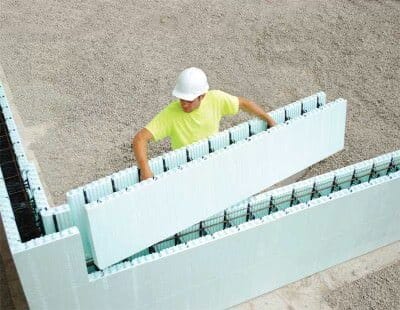
An ICF block being installed
What is stopping its widespread use? Nearly all manufacturers of ICF are USA and Canadian-based, focusing primarily on those markets. Stick Construction is 10% cheaper, and 90% of all residential construction is done using it, meaning infrastructure is built and widely used for stick construction. It will take time for infrastructure, a better understanding of the product, and a narrowing margin between stick and ICF costs for it to really take hold in North America.
However, in Latin America, with CMU construction being the standard building process, there is widespread use of concrete and rebar already. The CMU building process is already quite similar to ICF, and once the contractors understand the process, they will actually prefer it.
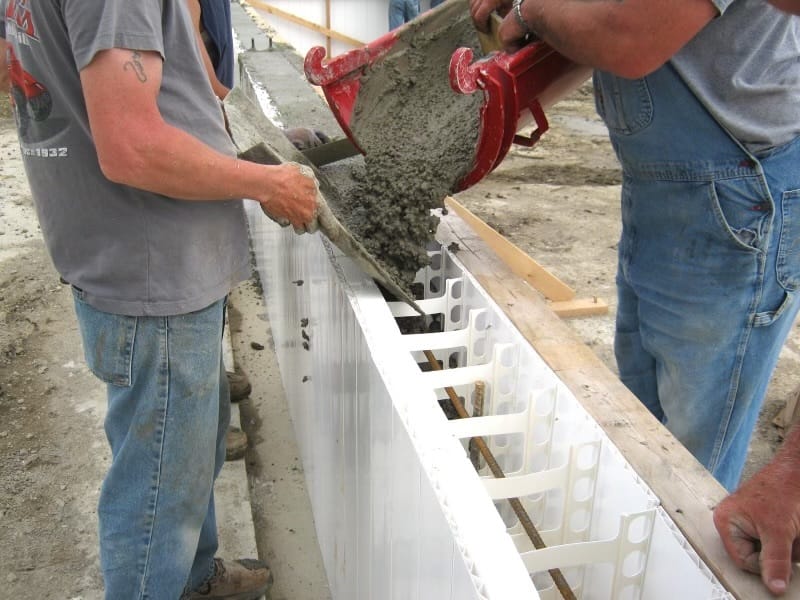
Once the forms are up and properly braced, concrete can be poured in the center
With this method, we're confident that we can build faster, more efficiently, and reduce labor costs. We believe we can also save money eventually, although it hasn't been proven yet in Costa Rica.
It may sound ambitious, but we are considering manufacturing the materials ourselves in the Grecia free zone. We see the appeal of the free zones' tax incentives and have enough demand for homes to easily justify setting up manufacturing facilities.